Local Law 11 / FISP: What Building Owners Need to Know
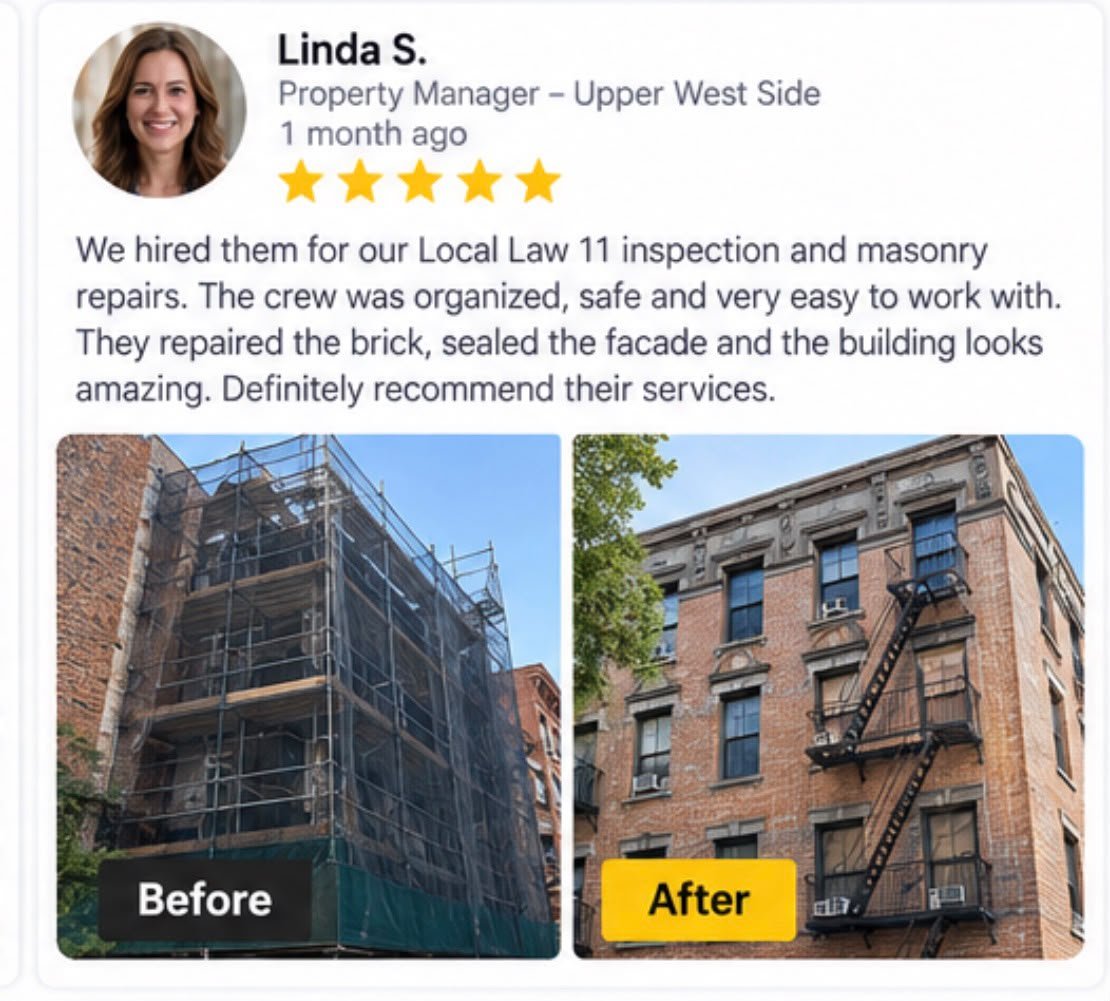
New York City requires owners of buildings higher than six stories to have exterior walls and appurtenances critically examined every five years. The QEWI files the technical facade report in DOB NOW: Safety and classifies the facade as SAFE, SWARMP (Safe With a Repair and Maintenance Program), or UNSAFE. When an unsafe condition is identified, public protection may be required immediately and the repair process becomes time-sensitive. A practical contractor’s role is to turn the QEWI’s repair scope into safe, organized field work: access, protection, masonry, concrete, waterproofing, metal work, documentation and coordinated closeout.


25 Local Law 11 / Facade Services
The following service sections are written to be publishable as one comprehensive page or split into individual service pages later. Keep only services 786 Construction Services actually offers and only make license, permit, warranty or inspection claims that can be verified.
Permit Filing & DOB
Permit Filing & DOB
Permit Filing & DOB
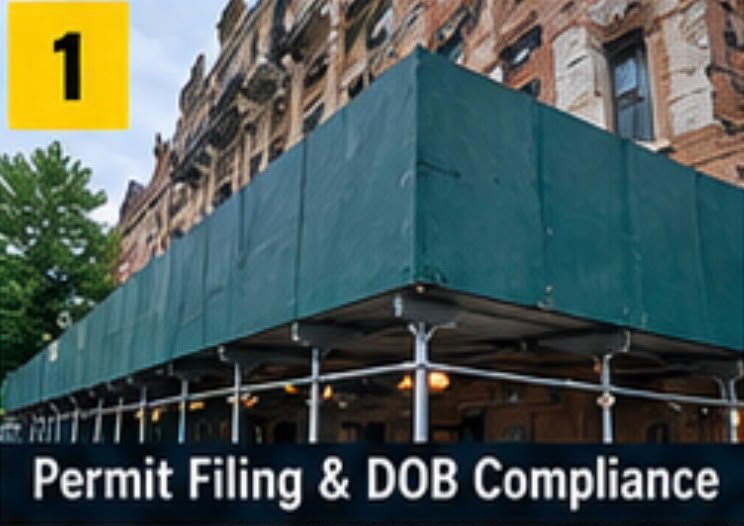
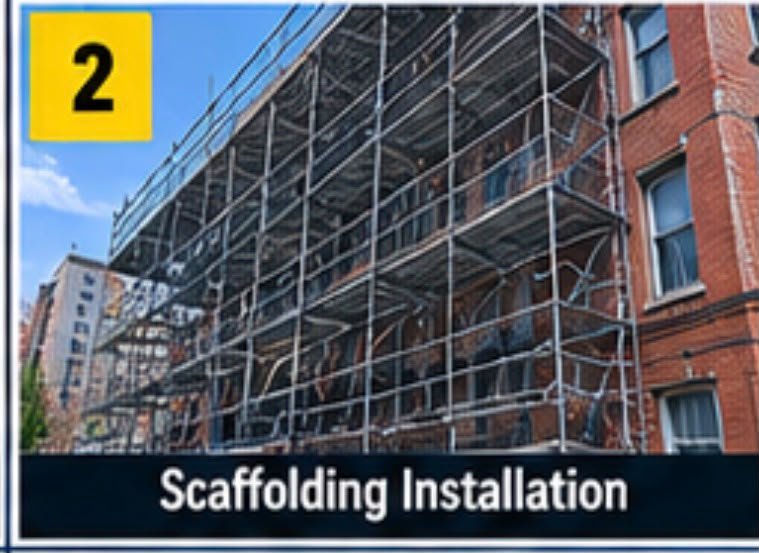
Facade work can range from ordinary repair to work that requires DOB permits, construction documents, equipment filings or other approvals. We coordinate the construction side with the owner’s registered design professional, filing representative and QEWI so permit-dependent work is not treated as a guess. Permit requirements depend on the exact scope, materials, access equipment and building conditions.
- Scope review before mobilization
- Coordination with architect/engineer
- DOB work-permit support
- Permit posting and site-document coordination
- Closeout information for the project team
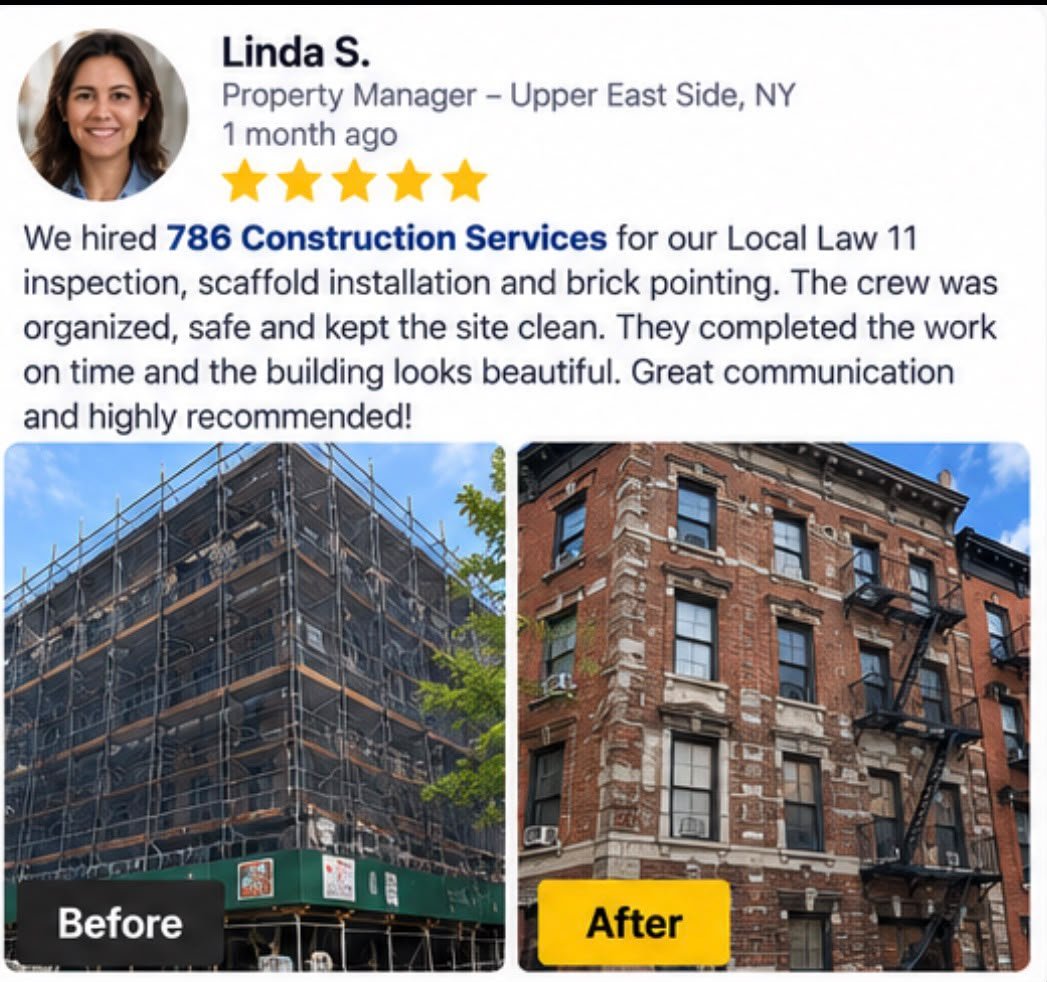
Scaffolding Installation
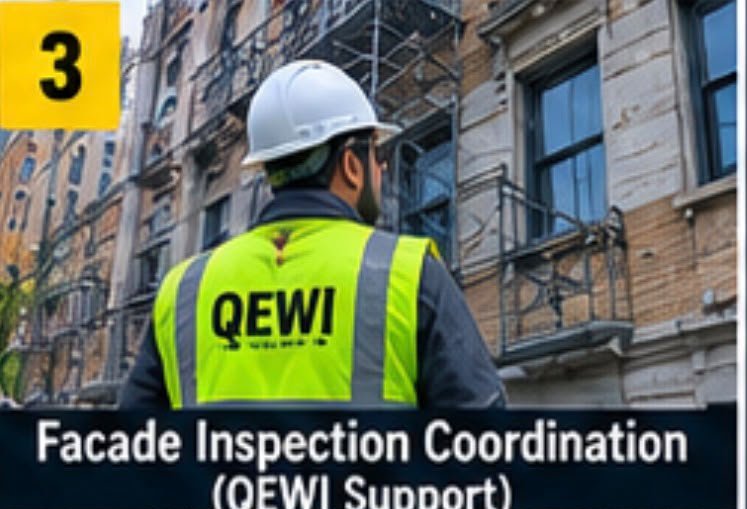
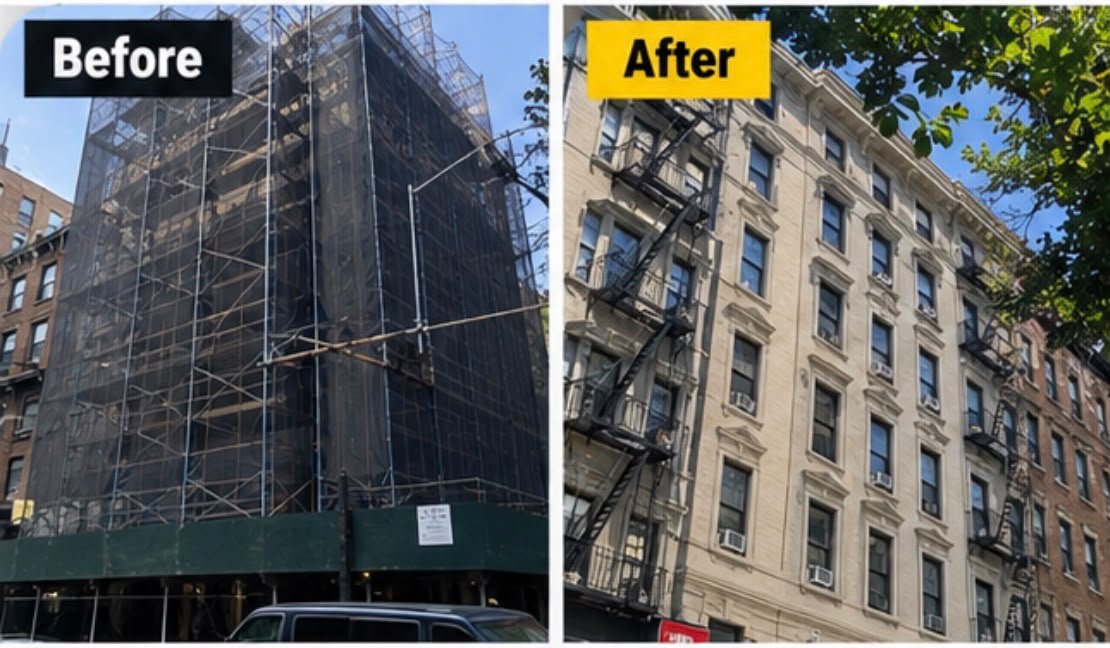
High-rise and mid-rise facade work depends on safe access. The right access method is selected for the building, repair locations and approved safety plan. We coordinate facade work performed from supported scaffold, suspended scaffold or other approved access systems as applicable to the project.
- Elevation-by-elevation access planning
- Drop locations coordinated with repair map
- Protection of windows and occupied areas
- Daily work-zone housekeeping
- Access coordination with licensed/qualified parties where required
Facade Inspection
Facade Inspection
Facade Inspection
Many owners already have a QEWI report but need a contractor who can turn marked facade conditions into a workable repair plan. We review the repair locations with the project team, organize access, sequence trades and build the field scope around the QEWI’s observations and approved construction documents where required.
- QEWI repair-scope coordination
- Facade condition mapping support
- Repair sequencing by elevation
- Photo documentation during work
- Closeout coordination with owner and design team
Brick Repointing
Brick Repointing
Brick Repointing
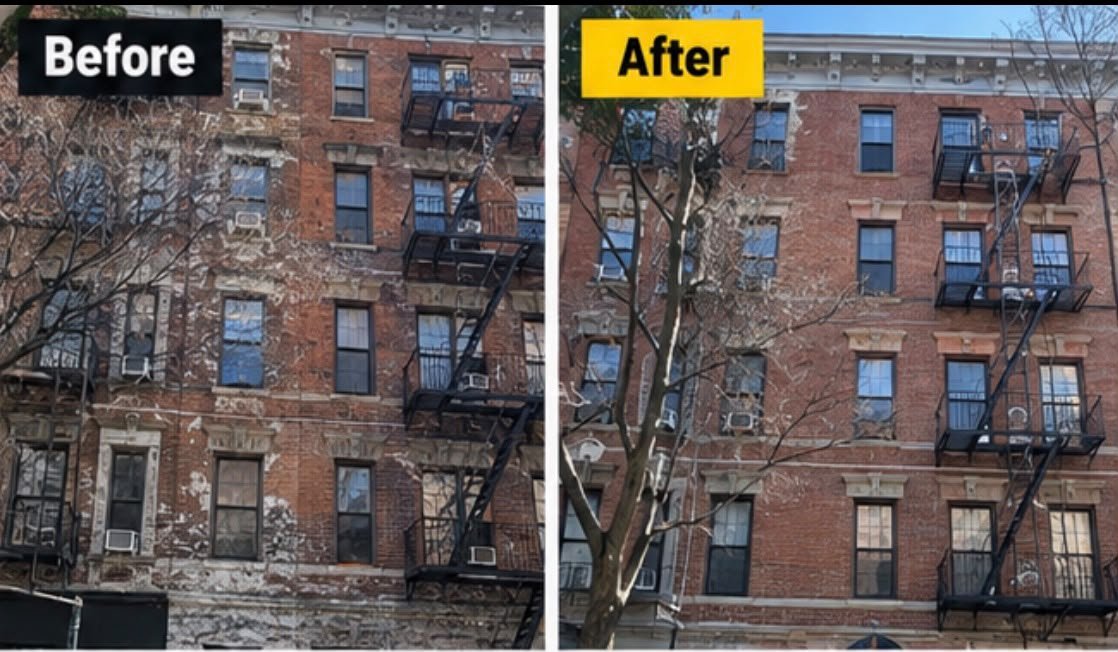
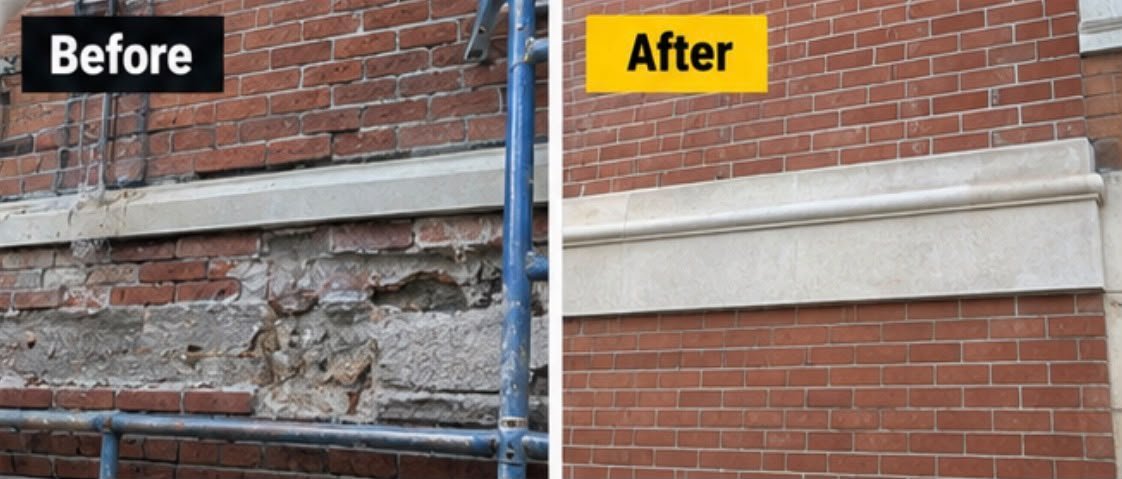
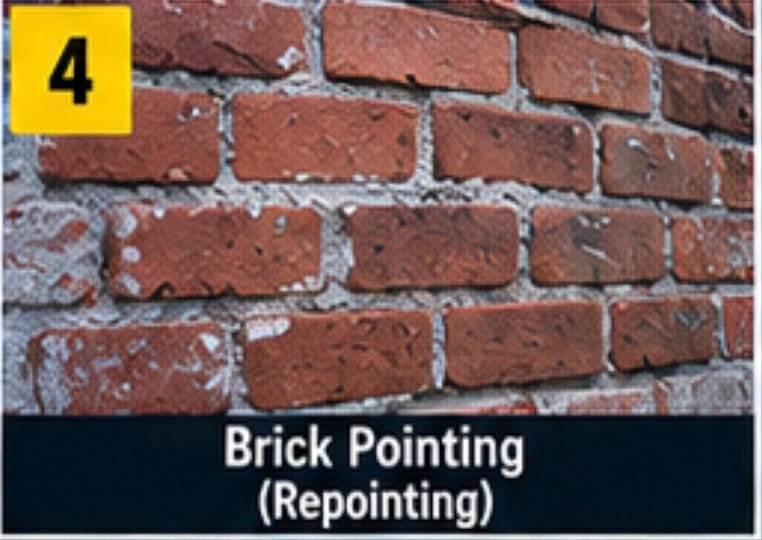
Open, cracked or washed-out mortar joints let water move deeper into masonry and can accelerate deterioration. Repointing removes deteriorated mortar to a sound depth and installs compatible replacement mortar with a joint profile appropriate to the existing wall. The objective is not simply to make joints look new; it is to restore a durable weather-resisting masonry surface without damaging the brick.
- Mortar-joint cutting and cleaning
- Compatible mortar installation
- Joint tooling and finish matching
- Localized test areas when appropriate
- Final washdown and repair documentation
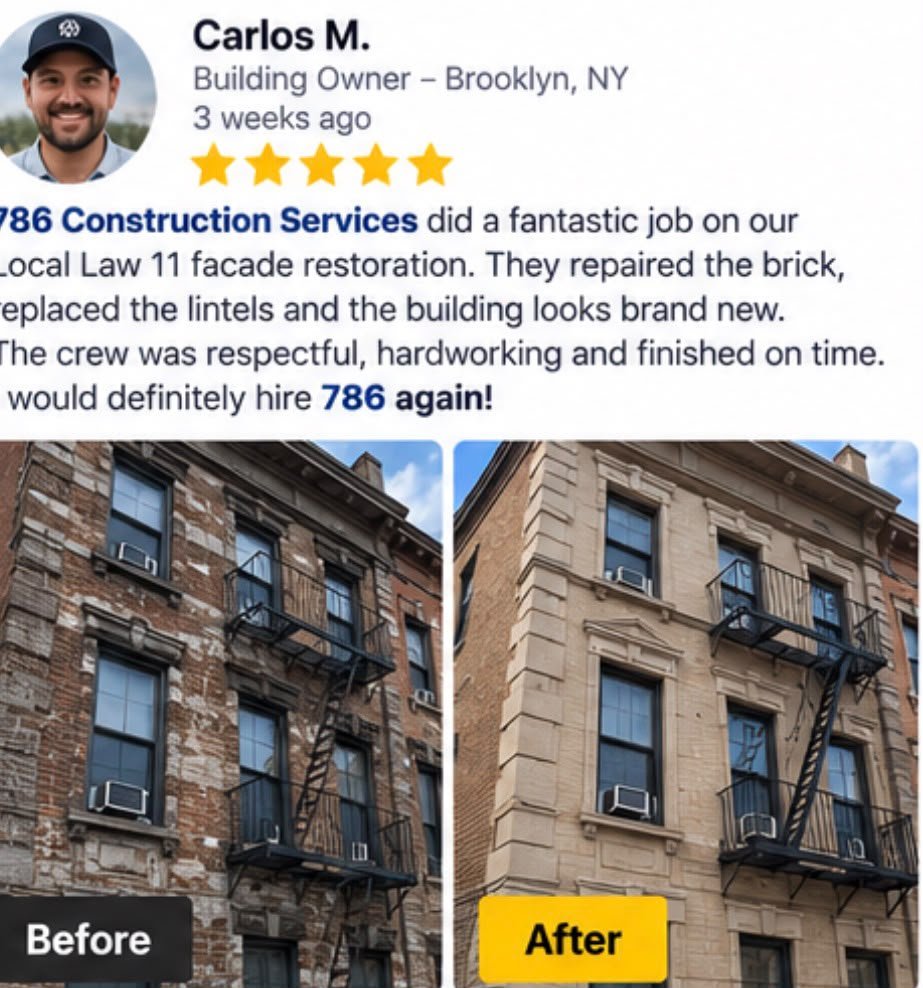
Brick Replacement
Brick Replacement
Brick Replacement
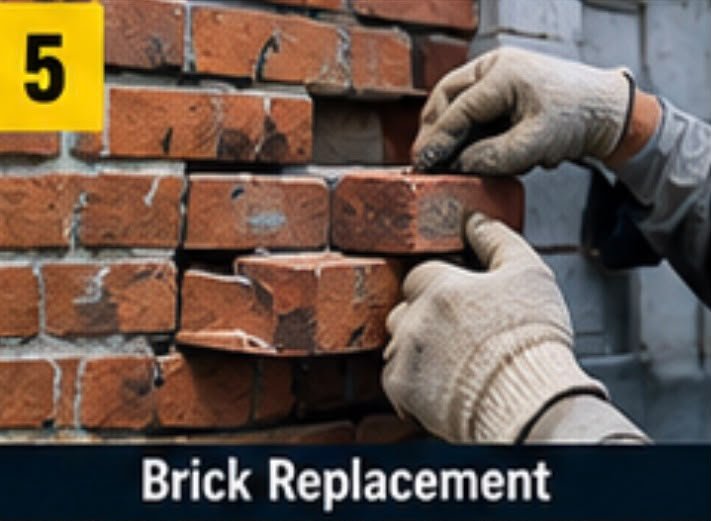
Spalled, fractured, displaced or severely weathered brick may need replacement rather than surface patching. We remove failed units carefully, rebuild localized masonry areas, maintain coursing and bond, and match the surrounding wall as closely as practical. Larger replacement areas may require engineered details and permits.
- Individual brick replacement
- Localized wall rebuilding
- Matching size, color and texture
- Mortar compatibility
- Staged masonry replacement around openings
Concrete Repair
Concrete Repair
Concrete Repair
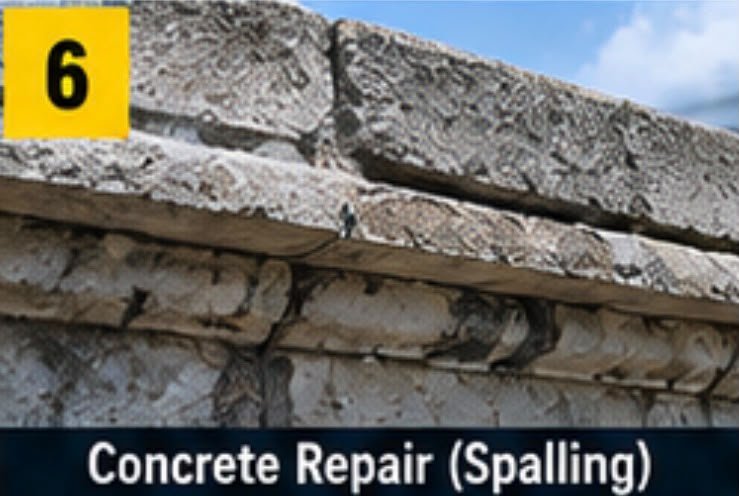
Concrete spalls often develop where moisture reaches reinforcing steel and corrosion expands beneath the surface. Proper repair typically means removing unsound concrete, treating exposed reinforcement as specified, rebuilding the section with compatible repair material and restoring the protective surface.
- Sounding and marked-area repair
- Removal of loose concrete
- Rebar cleaning/treatment as specified
- Patch rebuilding and finishing
- Protective coating preparation
Lintel Repair
Lintel Repair
Lintel Repair & Replacement
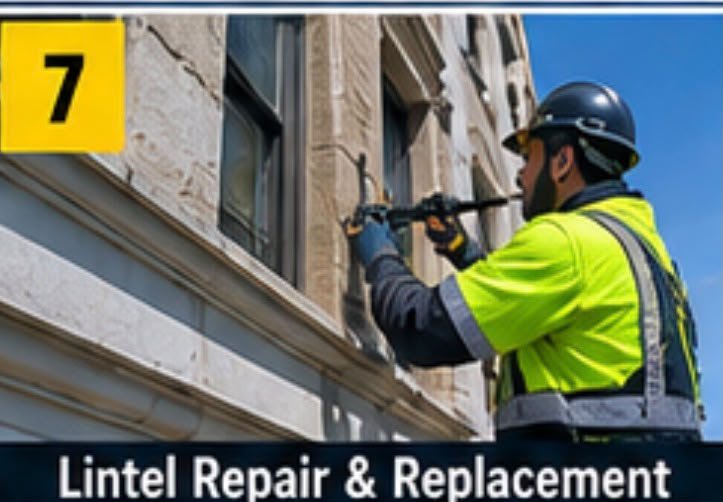
Corroded steel lintels can expand as they rust, pushing on surrounding masonry and creating step cracks, displacement or loose brick above windows and doors. Lintel work can include opening the masonry, removing deteriorated steel, installing or repairing specified lintel components, corrosion protection, flashing and rebuilding the masonry above.
- Window and door lintel repair
- Corroded steel treatment
- Lintel replacement where specified
- Flashing integration
- Masonry rebuilding above openings
Shelf Angle Installation
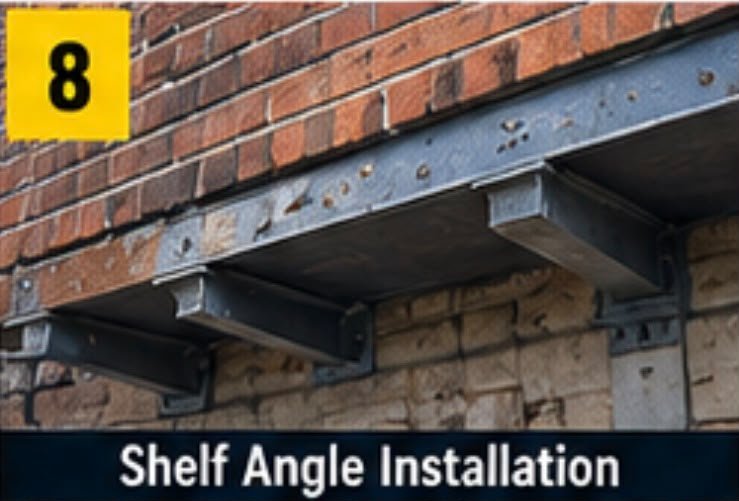
Multi-story masonry facades may rely on shelf angles and related support components. Corrosion, movement or failed joints can telegraph through the brickwork. Where the engineer’s investigation identifies support-related defects, we execute the approved repair scope and rebuild affected masonry in controlled sections.
- Selective probes/openings
- Corrosion-related masonry removal
- Specified steel repair or replacement
- Movement-joint restoration
- Rebuilding and weatherproofing
Cornice Repair
Cornice Repair
Cornice Repair
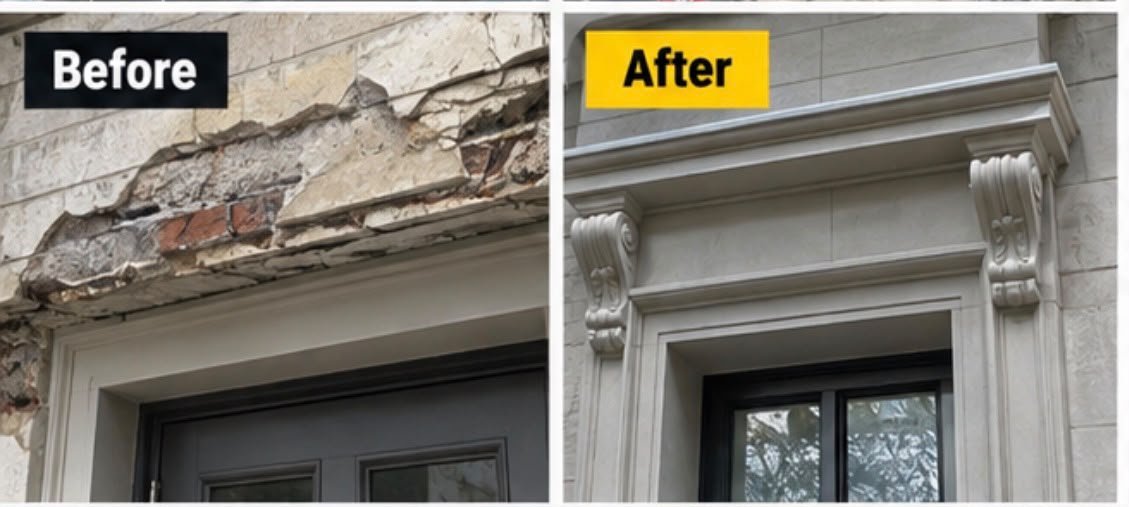
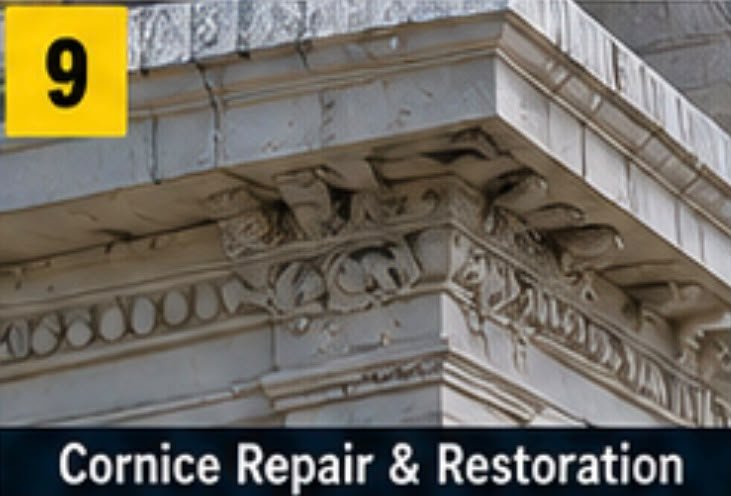
Cornices, bands, brackets and projecting decorative elements require close attention because deterioration can create overhead hazards. Depending on material and condition, the work may involve masonry restoration, sheet-metal repair, anchorage, patching, waterproofing or selective replacement.
- Cornice stabilization
- Decorative masonry repair
- Sheet-metal detail repair
- Anchorage work per design
- Waterproofing at projections
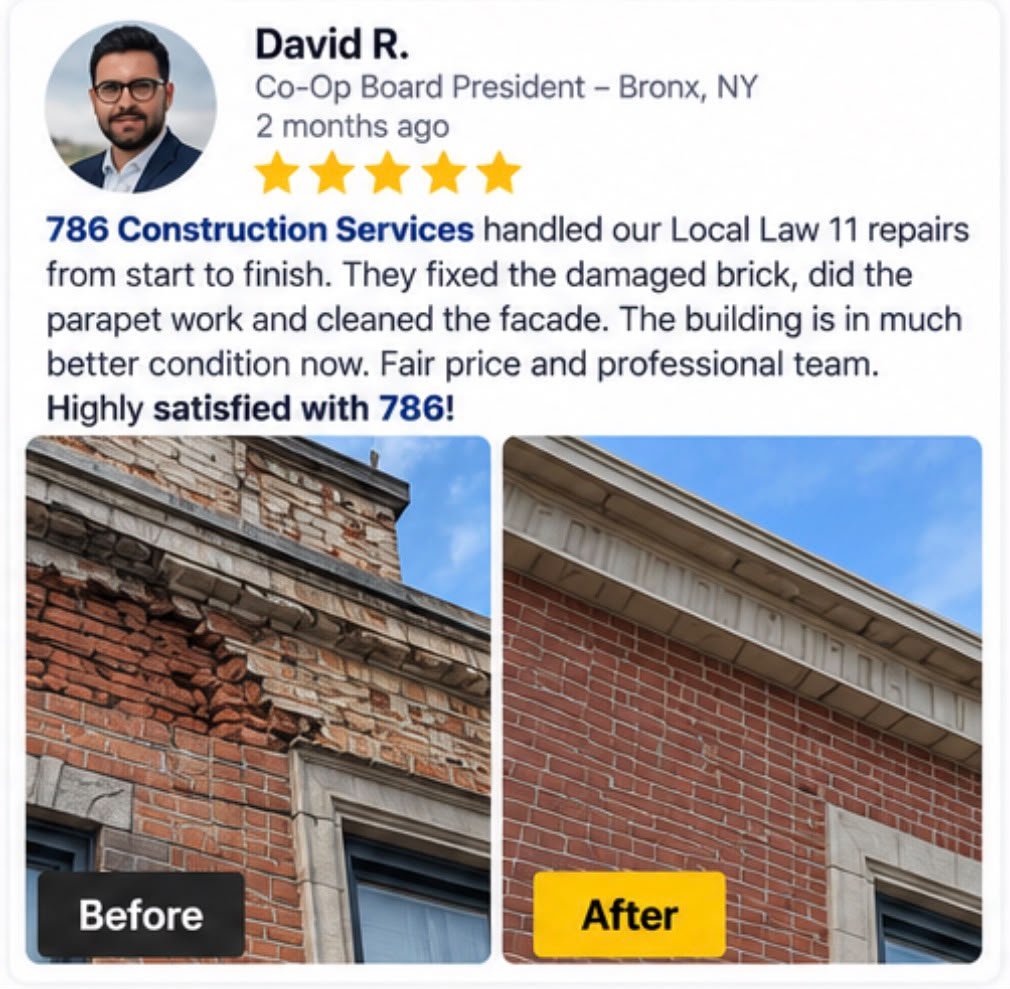
Parapet Wall Repair
Parapet Wall Repair
Parapet Wall Repair
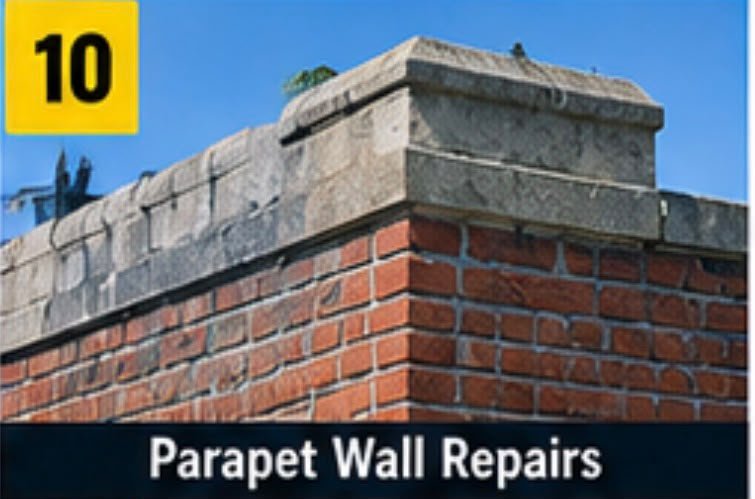
Parapets take heavy exposure from rain, freeze-thaw cycles and roof-edge movement. Loose coping, open joints, displaced brick and failed flashing can create both leakage and falling-object risks. We repair or rebuild parapet sections according to the approved scope and coordinate the wall with roof-edge waterproofing details.
- Parapet brick rebuilding
- Coping reset/replacement
- Mortar-joint restoration
- Flashing and roof-edge coordination
- Stabilization of loose components
Coping Replacement
Coping Replacement
Coping Replacement
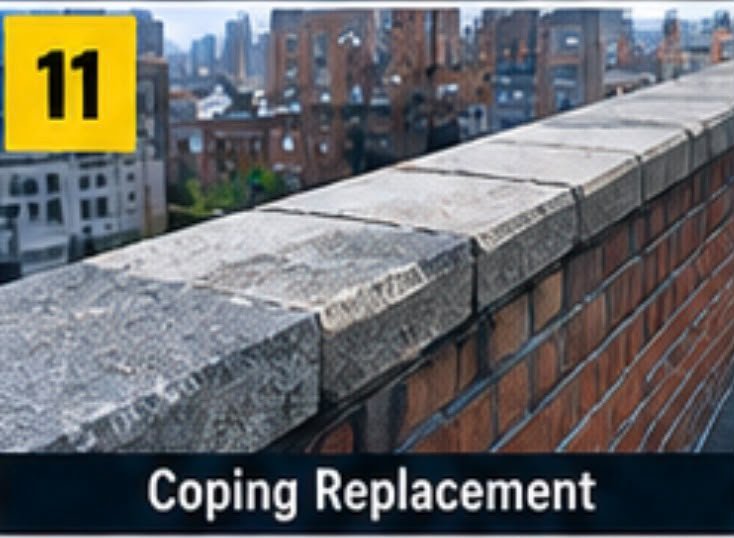
Coping stones and wall caps protect the top of parapets and masonry walls. Open joints, cracked units or poor pitch can send water into the wall below. We reset, repair or replace coping components as specified and restore joints and sealant transitions to improve water shedding.
- Coping reset
- Cracked coping replacement
- Joint restoration
- Sealant at transitions
- Water-shedding detail correction
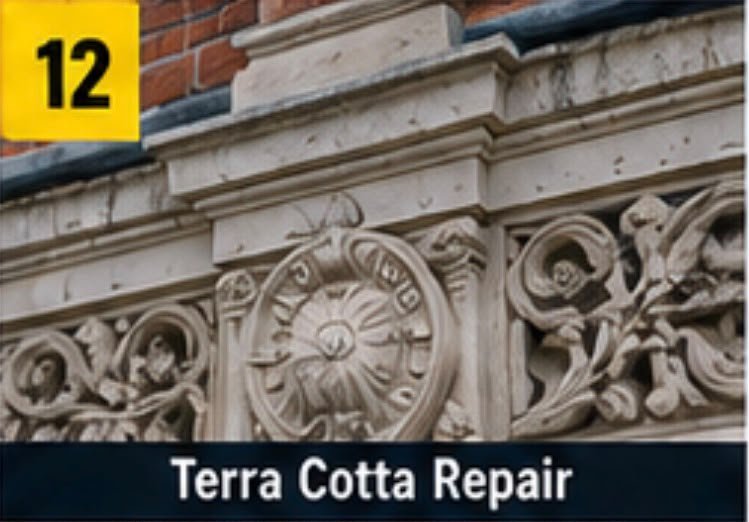
Terra Cotta Repair
Terra Cotta Repair
Terra Cotta Repair
Historic Manhattan facades often include glazed architectural terra cotta at cornices, window surrounds, bands and decorative features. Cracking, failed anchors and water entry require careful treatment. Repairs may include patching, pinning, replacement units, joint work, waterproof detailing or temporary stabilization as directed by the design professional.
- Terra-cotta condition repair
- Localized patching and pinning
- Replacement-unit coordination
- Joint and sealant restoration
- Decorative facade preservation
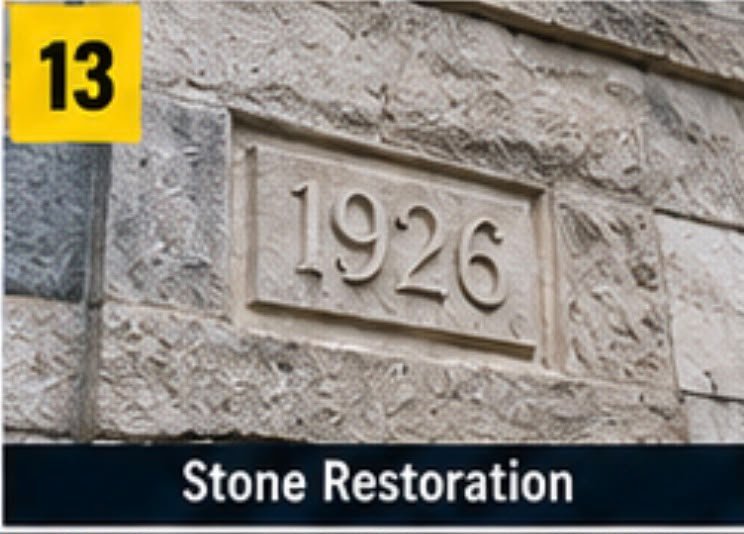
Stone Restoration
Stone Restoration
Stone Restoration
Natural stone and cast-stone elements can crack, delaminate, spall or lose mortar at joints. We carry out specified repairs to sills, bands, copings, surrounds and facade panels, with attention to compatible repair materials, anchorage details and water management.
- Stone patching
- Cast-stone repair
- Joint repointing
- Sill and coping repair
- Localized replacement where required
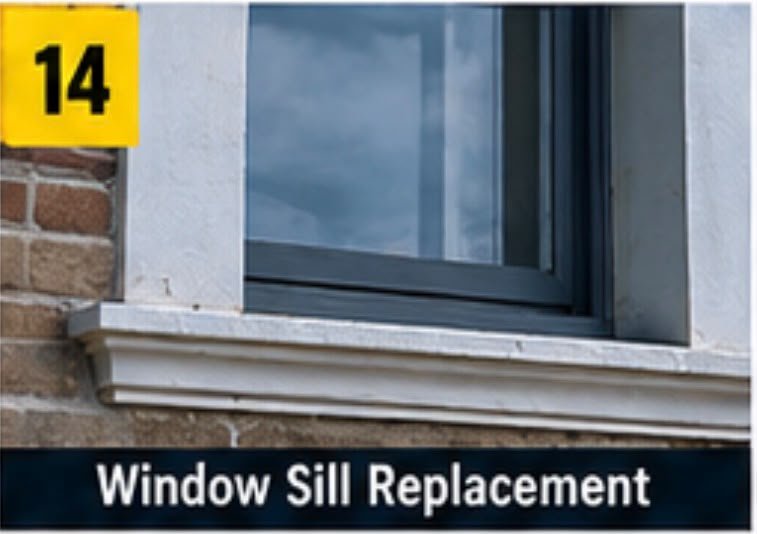
Window Sill Replacement
Facade problems frequently concentrate around windows. Cracked sills, open head joints, failed sealant and deteriorated masonry can admit water into occupied spaces. We repair the surrounding facade components and coordinate sealant, flashing and masonry work so the opening functions as a complete weather-resisting assembly.
- Sill repair/replacement
- Window-head masonry repair
- Perimeter sealant replacement
- Flashing-related repairs
- Localized brick/stone work
Caulking
Caulking
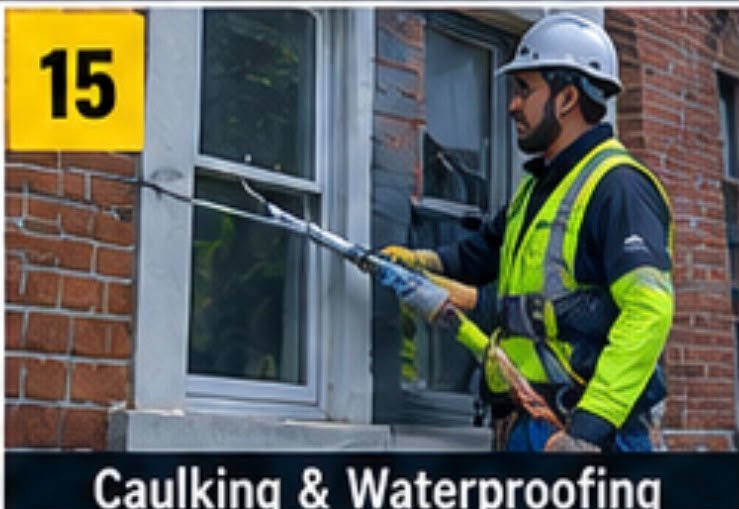
Caulking & Waterproofing
Exterior sealant is a maintenance item with a limited service life. Hardened, cracked or detached joints around windows, panels, control joints and material transitions can become direct water-entry paths. We remove failed material, prepare the joint and install the specified sealant system with appropriate backing where required.
- Window perimeter caulking
- Control/expansion joint sealant
- Panel joint restoration
- Backer rod installation where specified
- Adhesion and finish checks
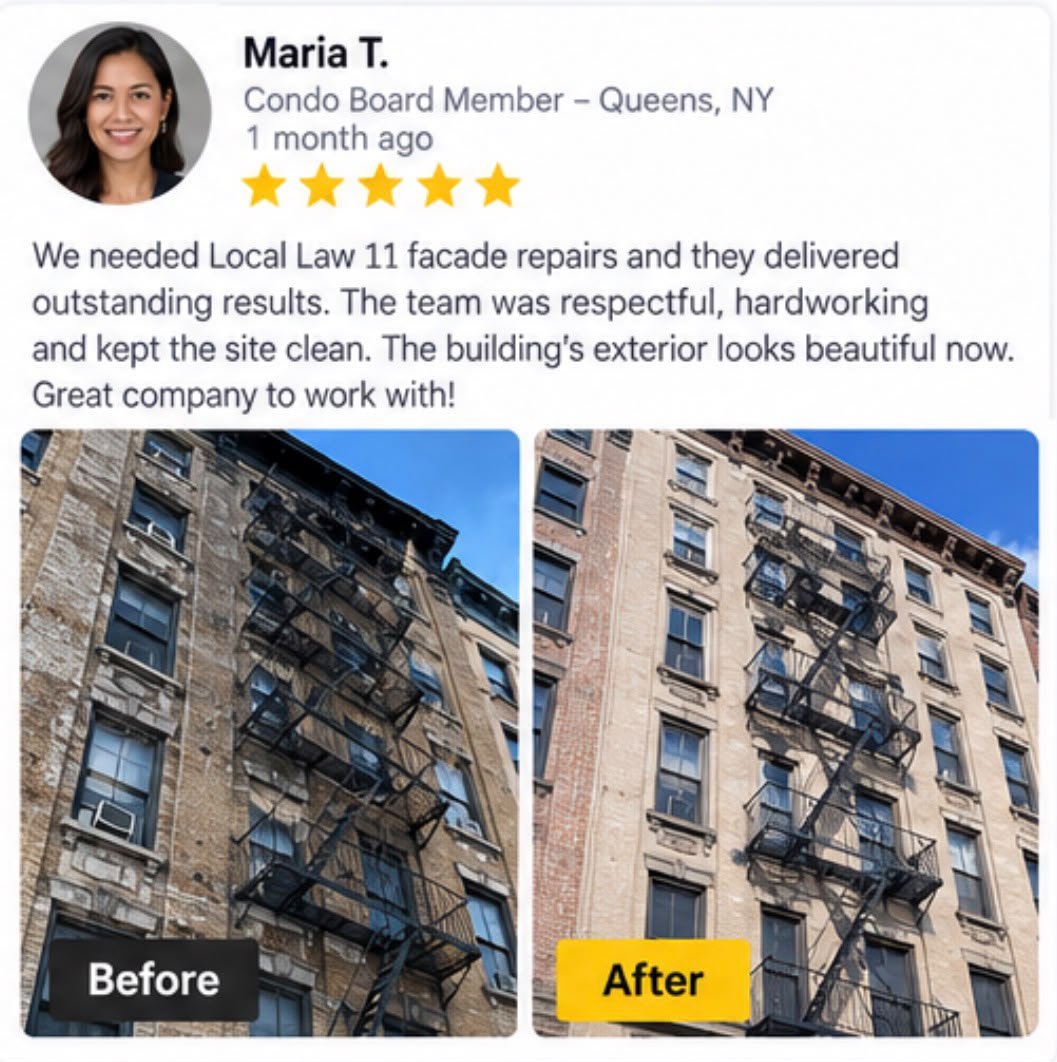
Facade Cleaning
Facade Cleaning
Facade Cleaning
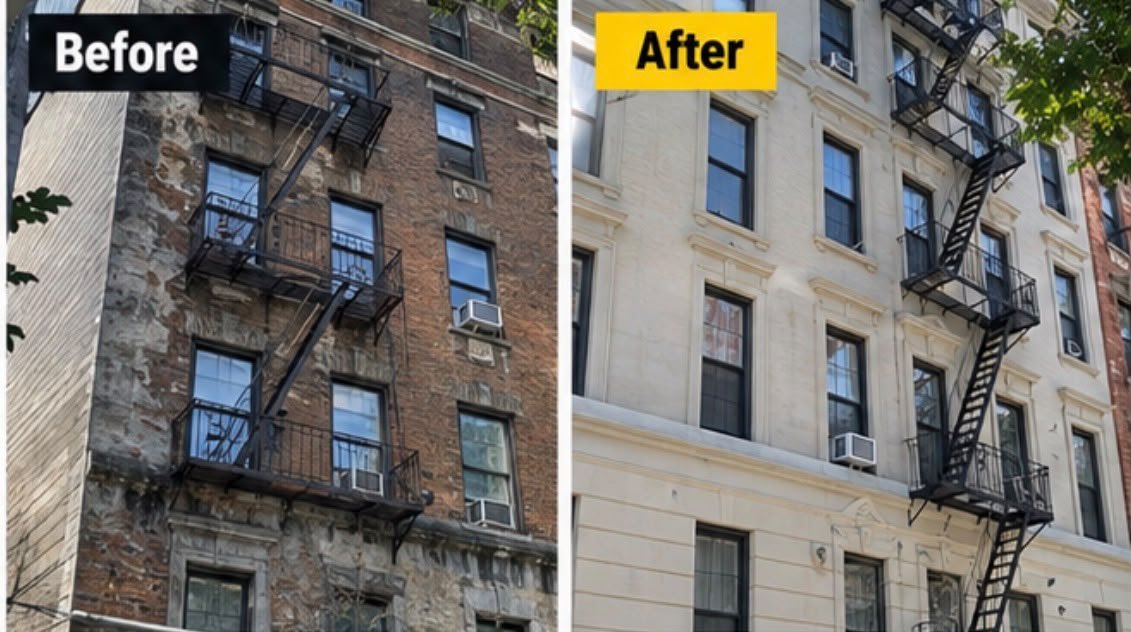
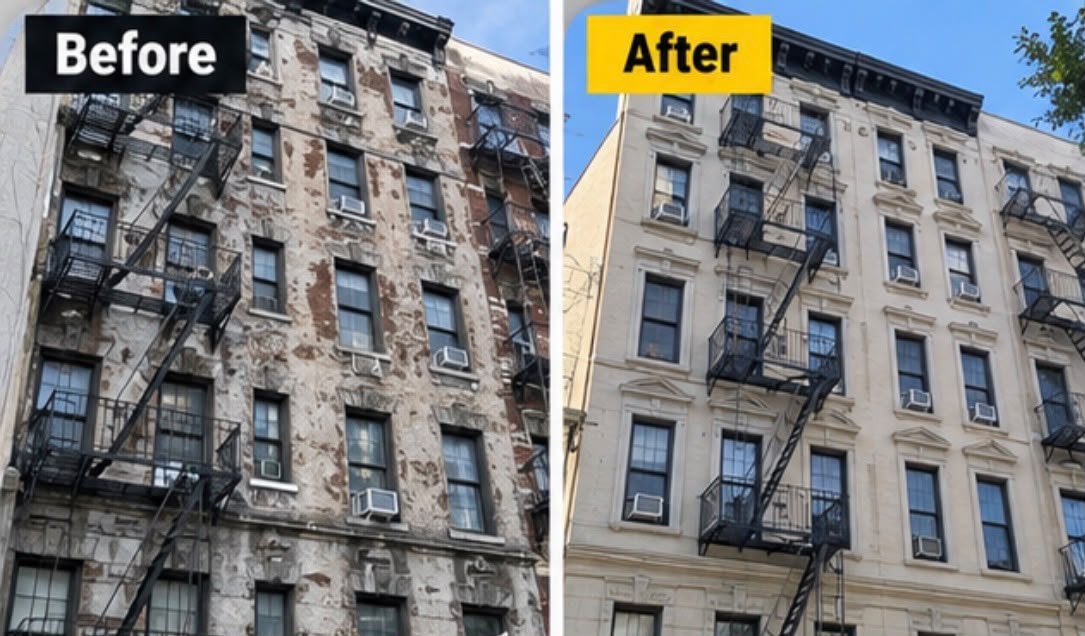
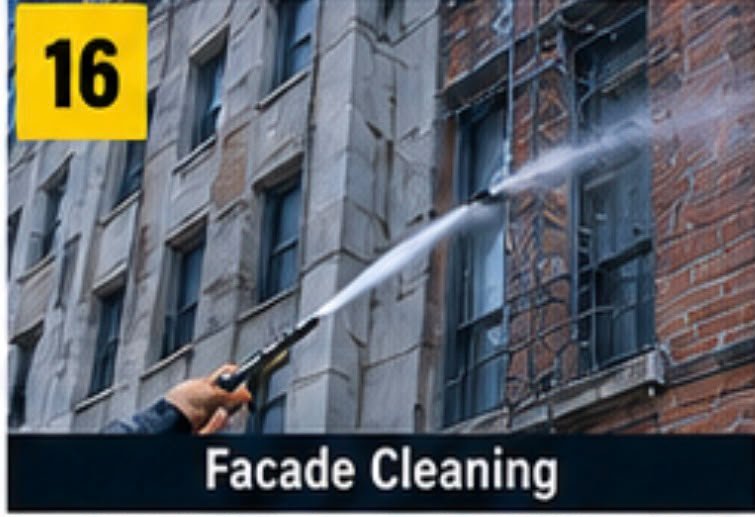
Cleaning can improve appearance and expose the true condition of masonry, but aggressive methods can damage brick, stone, mortar and architectural finishes. We use project-appropriate cleaning methods, test areas when needed and protect adjacent glass, metal and occupied spaces.
- Masonry cleaning
- Stain and atmospheric-soiling removal
- Localized biological-growth cleaning
- Test-panel approach
- Protection and controlled washdown
Stucco Repair
Stucco Repair
Stucco Repair & Refinish
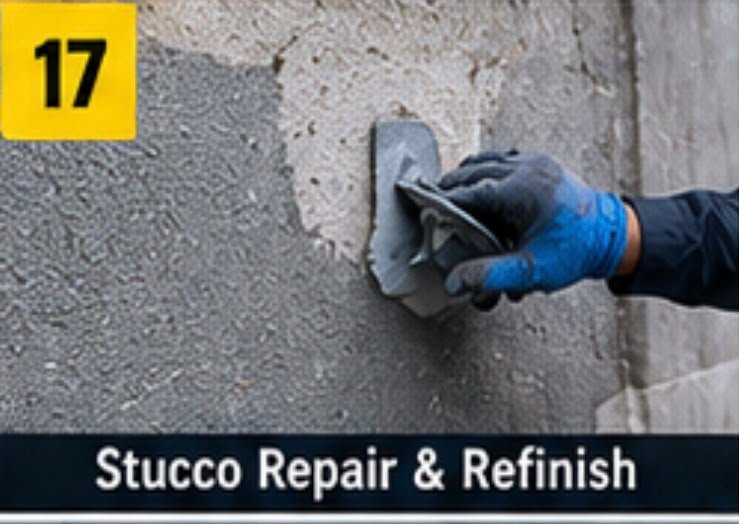
Stucco surfaces require careful assessment because cracks, moisture damage and surface deterioration can affect both appearance and long-term performance. Depending on the condition, the work may involve crack repair, patching, surface preparation, texture matching, waterproofing or complete refinishing.
- Stucco crack repair
- Damaged area patching
- Texture and finish matching
- Moisture and waterproofing treatment
- Stucco surface refinishing
Balcony Repair
Balcony Repair
Balcony Repair & Restoration
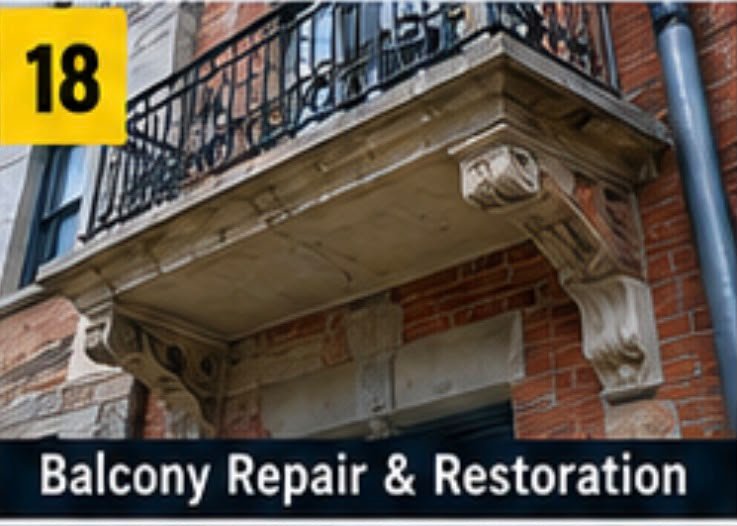
Balconies, terraces, railings and guards require attention to concrete, masonry, waterproofing and metal connections. Loose railings, spalled edges or failed joints can create serious safety concerns. We execute the repair scope prepared by the project professional and coordinate protection below the work area.
- Balcony-edge concrete repair
- Railing/guard repair
- Post and anchor-area repairs
- Waterproofing transitions
- Protective coating work
Fire Escape Repair
Fire Escape Repair
Fire Escape Repair
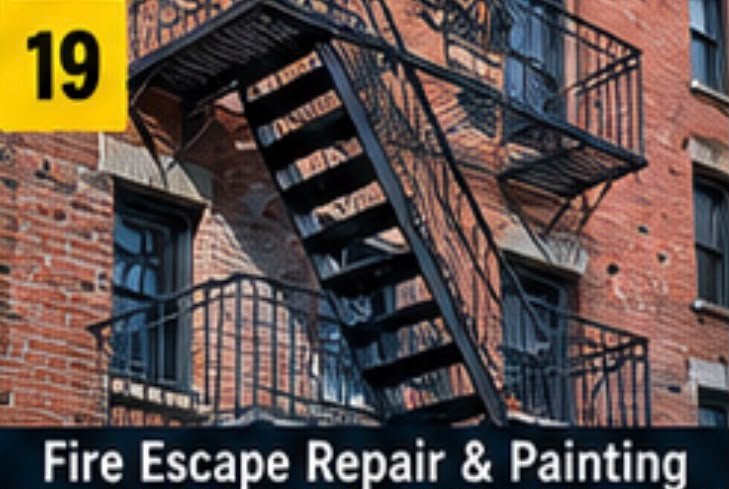
Fire escapes and exterior metal components are part of the facade environment and can deteriorate through corrosion, failed connections and coating breakdown. Work may include surface preparation, localized repair, replacement of specified components and protective coating, subject to the required design and permit conditions.
- Rust removal and preparation
- Metal repair per approved scope
- Connection/component replacement where specified
- Primer and protective coating
- Coordination around masonry attachments
Exterior Painting
Exterior Painting
Exterior Painting
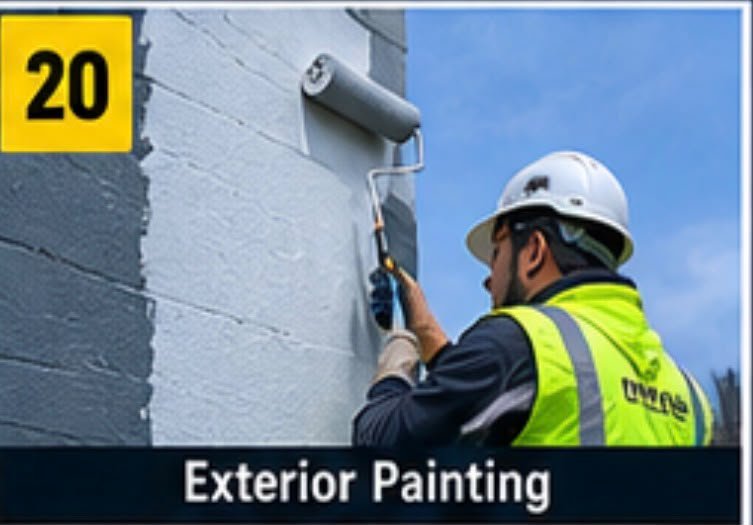
Exterior painting requires proper surface preparation and attention to existing conditions to achieve a durable, clean finish. Depending on the surface and its condition, the work may involve cleaning, scraping, patching, priming, caulking or applying protective exterior coatings.
- Surface preparation and cleaning
- Peeling paint removal
- Crack and surface repair
- Primer and protective coating
- Exterior finish application
Masonry Restoration
Masonry Restoration
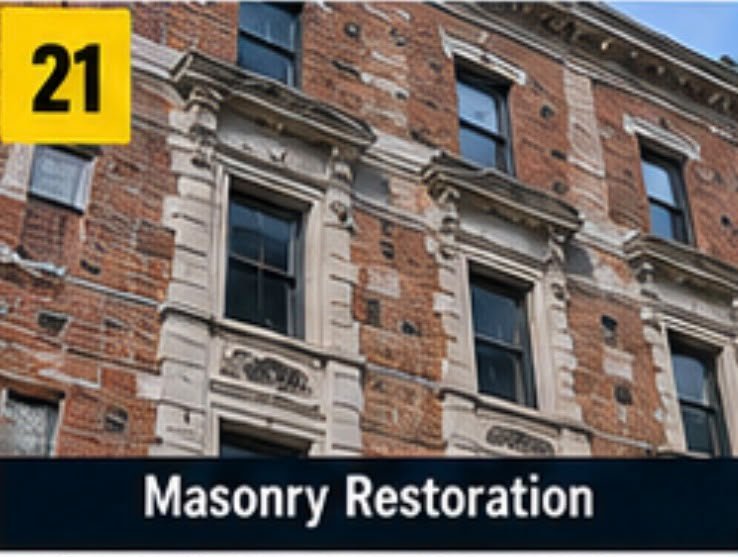
Masonry Restoration
Masonry restoration requires careful assessment to address deterioration while preserving the strength and appearance of the existing structure. Depending on the condition, the work may involve repointing, brick replacement, crack repair, cleaning, waterproofing or selective masonry rebuilding.
- Mortar joint repointing
- Brick and stone replacement
- Masonry crack repair
- Surface cleaning and restoration
- Waterproofing and moisture protection
Flashing & Water Infiltration
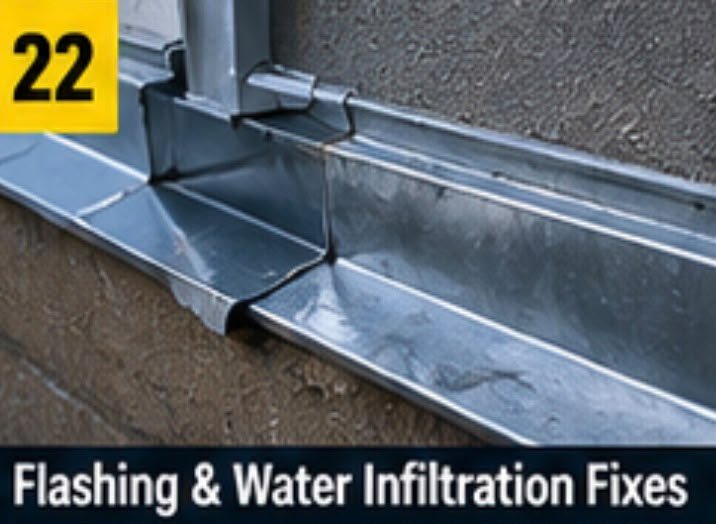
Flashing and water infiltration issues require careful inspection because moisture can lead to hidden structural damage, staining and material deterioration. Depending on the source and condition, the work may involve flashing repair, sealant replacement, waterproofing, drainage improvements or selective removal and replacement.
- Flashing inspection and repair
- Water infiltration troubleshooting
- Sealant and joint replacement
- Waterproofing at vulnerable areas
- Moisture damage repair
Sidewalk Sheds
Sidewalk Sheds
Sidewalk Sheds & Protection
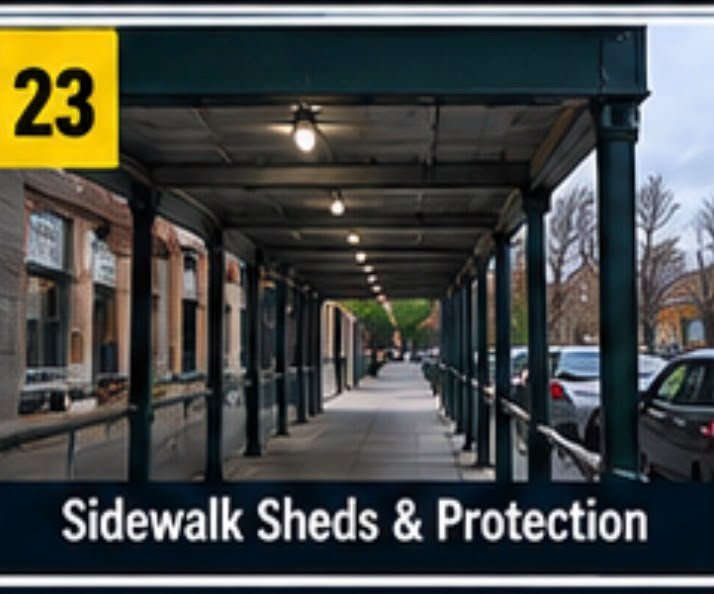
When unsafe facade conditions create a hazard to pedestrians or property, public protection may be required. Depending on the condition and approved plan, that can include a sidewalk shed, fence or structural netting. We coordinate the repair work around the required protection and access plan and keep the work zone organized for occupants, pedestrians and neighboring properties.
- Sidewalk shed coordination
- Pedestrian protection planning
- Construction fence coordination
- Structural netting coordination
- Repair sequencing behind public protection
Project Management
Project Management
Project Management
Successful restoration projects require clear planning, coordination and regular communication to keep work organised and on schedule. Depending on the project, the process may involve contractor coordination, site inspections, progress tracking, documentation and regular updates.
- Project planning and coordination
- Contractor and site management
- Regular progress inspections
- Work documentation and reporting
- Schedule and quality monitoring
Final Closeout
Final Closeout
Final Closeout & Documentation
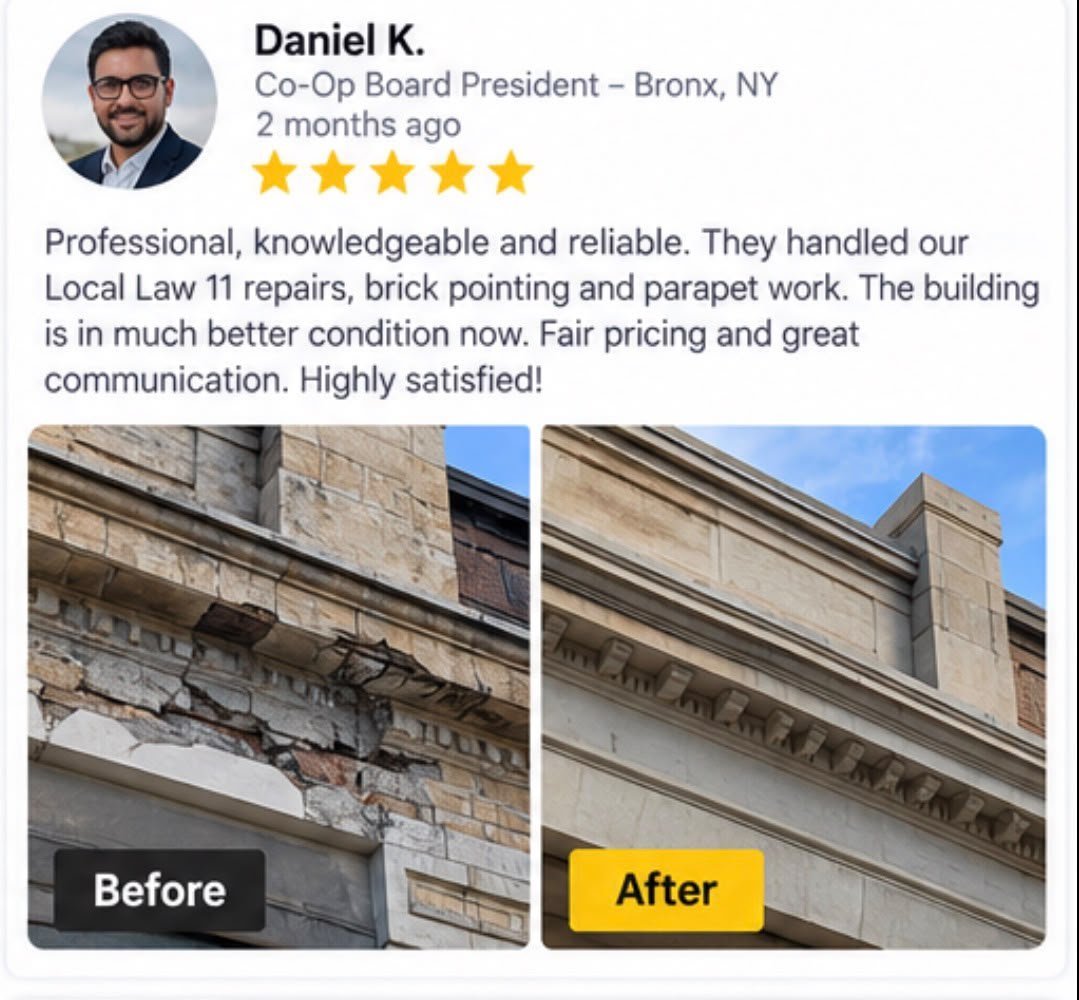
A proper project closeout ensures all completed work is reviewed, documented and handed over clearly. Depending on the project, the process may include final inspections, punch-list completion, repair records, warranties, photographs and closeout documentation.
- Final project inspection
- Punch-list completion
- Repair and maintenance records
- Project photographs and documentation
- Warranties and final closeout reports
Testimonials


Special Offers
Take Advantage of these great
offers from 786 builders
With free Inspections and estimates, simply submit a Free Quote request to get started.


Meet Our Team

How It Works
1
Planning
Planning is the first step where project requirements, scope, and budget are defined.
2
Approvals
Approvals involve getting all necessary permits and legal permissions from relevant authorities before work begins.
3
Design
Design includes creating detailed plans, layouts, and structural drawings based on client needs
4
Construction
Construction is the execution phase where the actual building work is carried out according to approved designs
5
Completion
Completion is the stage where all construction work is finalized and finishing touches are added
6
Scrubbing & Transferring
Scrubbing & Transferring involves final cleaning, quality checks, and handing over the completed project to the client
Connect with out local team,
Schedule your free Consultation below!
Fast Response
We respond to all estimate requests in 24 hrs or less.
Professional Advice
We can help you plan your next roofing project
Pressure Estimate
Free Estimate and no high pressure sales tactics
Satisfaction Guaranteed
Pay only once the job when you're satisfied
Frequently Asked Questions FAQs
What is Local Law 11 in NYC?
Local Law 11 is the common name used for NYC’s Facade Inspection & Safety Program (FISP). Buildings higher than six stories are generally subject to a critical facade examination every five years, with the technical report filed by a DOB-approved QEWI.
Who can perform the official FISP critical examination?
Only a DOB-approved Qualified Exterior Wall Inspector can perform the required critical examination and file the FISP technical report. A facade contractor can perform the repair work and coordinate access, documentation and closeout with the QEWI.
What do SAFE, SWARMP and UNSAFE mean?
SAFE means the facade does not require repair or maintenance to remain structurally safe through the next five years. SWARMP means it is safe now but needs repair or maintenance within the QEWI’s stated period. UNSAFE means a hazardous condition exists and requires prompt action.
What happens if a facade is classified UNSAFE?
The owner must address public safety immediately based on the QEWI’s recommendations. Protection such as a sidewalk shed, fence or netting may be required. DOB’s current guidance states unsafe conditions must be repaired within 90 days unless the formal extension process applies.
Does every Local Law 11 repair need a DOB permit?
No. Permit requirements depend on the exact work. Some limited ordinary facade repairs may be exempt, while structural work, larger replacement areas, construction equipment and other regulated scopes can require DOB filings and permits. The design professional should determine this before work begins.
Can brick pointing be part of Local Law 11 repairs?
Yes. Deteriorated mortar joints are a common facade maintenance condition. Repointing can restore weather resistance and masonry integrity when the brick itself remains serviceable.
When does brick need replacement instead of repointing?
Brick replacement may be needed when units are spalled, cracked, displaced, loose or deteriorated beyond a sound repair. The repair extent should follow the QEWI or design professional’s condition assessment.
Why do steel lintels cause brick cracking?
Corroding steel expands and can push against the masonry above windows and doors. That pressure can create horizontal or stair-step cracking, displaced brick and open joints. Repair often requires treating or replacing the lintel and rebuilding affected masonry.
Do you repair parapet walls?
Parapet work can include repointing, brick replacement, rebuilding, coping repair and coordination with flashing or roof-edge waterproofing. The exact scope depends on the observed condition and approved details.
Can facade leaks come from window joints?
Yes. Failed perimeter sealant, cracked sills, open masonry joints and flashing problems around windows are common water-entry paths. A good repair addresses the source rather than simply coating the interior symptom.
What is facade waterproofing?
Facade waterproofing is a broad term. Depending on the wall, it may mean repairing mortar and cracks, replacing failed sealant, correcting coping or flashing, and in some cases applying a compatible breathable water-repellent treatment.
Is power washing safe for old brick?
Not automatically. Excessive pressure or aggressive chemicals can damage brick, mortar, stone and historic finishes. Cleaning methods should be selected for the substrate and tested when appropriate.
Do Local Law 11 projects need scaffolding?
Many do, but not all. Access can involve supported scaffold, suspended scaffold or another approved method depending on building height, repair locations, public protection and the project safety plan.
When is a sidewalk shed required?
A sidewalk shed may be required when necessary to protect the public from unsafe facade conditions or construction hazards. The QEWI/design team and DOB requirements govern the project-specific protection plan.
Can a sidewalk shed be removed as soon as repairs look finished?
Not necessarily. For an unsafe FISP condition, public protection generally remains until the required amended filing or partial shed removal approval is obtained. The project team should coordinate removal with the QEWI and DOB requirements.
What is a SWARMP repair deadline?
The QEWI assigns the completion date based on the condition. DOB states the date may not be less than one year or more than five years. Owners should not wait until the final weeks because access, permits and material lead times can affect scheduling.
What happens to an old SWARMP item that was never repaired?
DOB states that a condition reported as SWARMP in the previous cycle that remains unrepaired must be reported as UNSAFE in the current cycle.
Can 786 Construction Services handle masonry and waterproofing together?
For scopes the company is qualified and contracted to perform, combining related masonry, sealant and waterproofing work can reduce gaps between trades. The final scope should still follow the project documents and QEWI/design-professional direction.
Do you work on terra cotta and architectural details?
The service scope can include terra-cotta, stone, cornice and architectural-detail restoration when the repair method and required approvals are established by the project team. Historic materials often need mockups, compatible products and careful matching.
What if the building is landmarked?
Landmarked buildings and properties in historic districts may require NYC Landmarks Preservation Commission approval before facade work. Verify the property’s status before ordering materials or starting visible exterior work.